
How many letters, counted
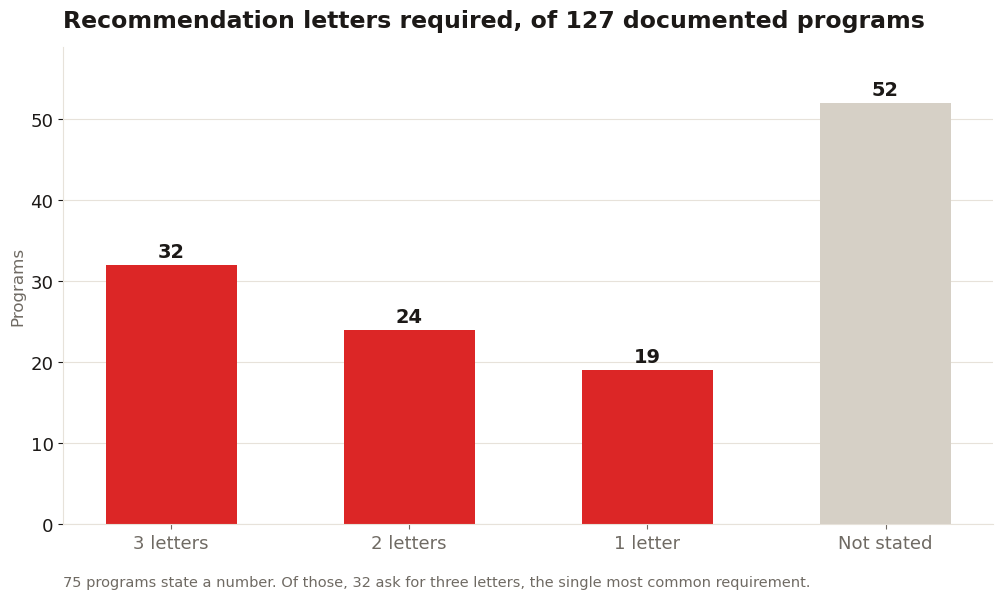
75 of the 127 programs state how many letters they require. The other 52 say nothing in their recorded requirements, which does not mean zero letters. It means you have to check the program page yourself, and that check belongs on your list in September, not December.
Three letters is the most common stated requirement, at 32 programs. Two letters follow at 24, and one letter at 19. So the typical applicant is not arranging one favor. They are running a small project with three busy academics, each writing into several different portals, each with its own login and its own quiet failure mode.
Multiply it out. A list of nine programs at three letters each is 27 separate letter submissions standing between you and nine complete files. Every one of them is due on an application deadline you do not personally submit. That is the entire case for tracking this properly instead of trusting memory and goodwill.
The strategy, before the apps
Ask 6 to 8 weeks before the deadline. Professors write better letters with time, and the ask itself takes a week of email tag more often than anyone admits.

Pick people who know your work, not the most senior title. A detailed letter from a lecturer beats a vague one from a dean, every time.
Give each recommender a packet. Your CV, your SOP draft, bullet points of what you did in their class, and the deadline list with your internal dates, the ones two weeks early, clearly marked as theirs.
Track per school. Who is writing, which portal, submitted or not. Three states are enough: asked, confirmed, submitted. Anything fancier is decoration.
What trackers add, and what to use
What trackers add: per recommender status across schools, automated nudge reminders, and alerts when a letter is still pending 10 days out. A spreadsheet does this available. ApplyCheck does it with push alerts so the follow-up email actually gets sent. And because the letter count is a per program fact, DocCheck pulls it into the checklist it generates for each of your programs from the recorded requirements, next to the deadline it belongs to, which is where a letter stops being a hope and becomes a line item. The documents checklist shows where letters sit in the full document set, and our deadline tracker shortlist covers the alert tools in more depth.
The real strategy is the ask, not the app. Ask early, brief well, follow up once. Then trust the tracker, and spend the stress you saved on the statement of purpose, the one big document that is actually yours to write.
For the 52 programs that state no letter count, treat the silence as a task, not an answer. Open the program's own application page in September and write the number you find into your tracker yourself, because those programs are exactly where applicants discover a third letter requirement in December, when every professor's inbox is already full. If the page is genuinely ambiguous, email the program office and keep the reply with your packet materials. Ten minutes in September buys you the one thing December cannot: a recommender who still has time to say yes and mean it. And if a program turns out to need no letters at all, you have lost nothing but a line in a spreadsheet, which is the cheapest insurance in this entire process.
Sources: Common App